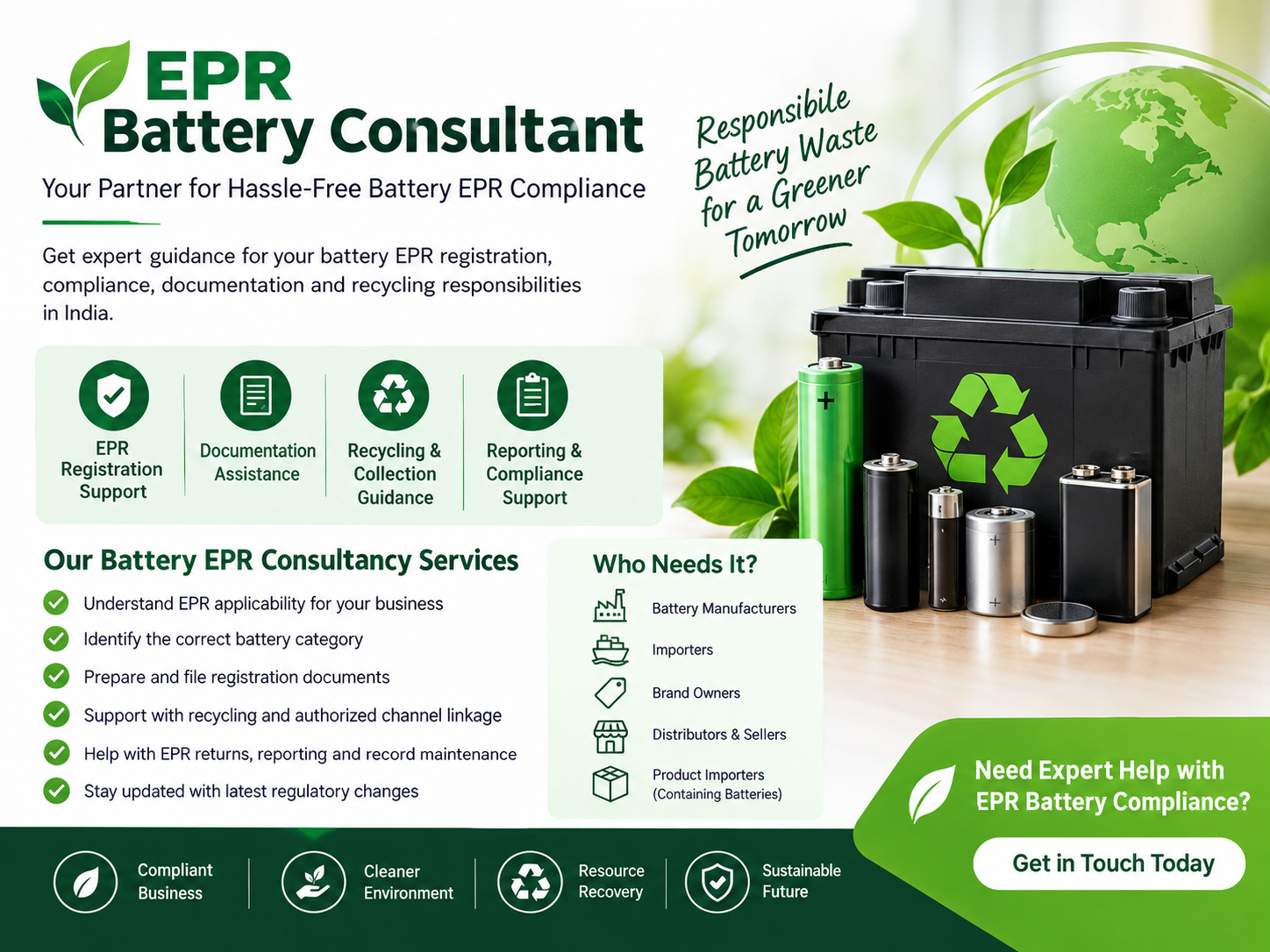
An EPR Battery Consultant provides professional assistance to businesses that need to understand and fulfill their responsibilities under India’s battery waste management regulations. With the increasing use of lithium-ion batteries, electric vehicle batteries, automotive batteries, portable batteries, and industrial batteries, proper battery waste management has become an important compliance requirement for eligible businesses.
Extended Producer Responsibility (EPR) is a regulatory approach under which eligible producers and importers have responsibilities relating to the environmentally sound management of waste batteries. Depending on the business category and applicable requirements, compliance can involve registration, maintaining records, meeting applicable EPR obligations, coordinating recycling activities, and submitting required information or returns.
Businesses that manufacture, import, sell, or use batteries in regulated products can benefit from professional guidance to understand their specific obligations. An experienced EPR Battery Consultant in India can support businesses throughout the registration and compliance process.
What Is Battery EPR?
Battery EPR refers to the responsibilities applicable to covered businesses under India’s Battery Waste Management Rules, 2022, along with subsequent amendments, notifications, and regulatory requirements.
The framework aims to promote the collection, recycling, recovery, and environmentally sound management of waste batteries while reducing improper disposal.
Depending on the nature of the business, obligations may apply to producers, importers, manufacturers, recyclers, and other entities covered by the regulations.
A business dealing with batteries should first determine its applicable category and then identify the relevant compliance requirements.
Who May Need Battery EPR Compliance?
Battery EPR requirements can apply to businesses involved in different battery-related activities. These may include manufacturers, importers, producers, and other entities covered by the applicable framework.
Examples include businesses dealing with:
Lithium-ion batteries
Electric vehicle batteries
Portable batteries
Automotive batteries
Industrial batteries
Battery packs
Consumer electronics containing batteries
Energy storage batteries
Imported products containing batteries
The exact obligations depend on the business activity, product, battery category, and applicable regulations.
EPR Battery Registration in India
EPR Battery Registration is an important step for businesses that fall within the applicable regulatory categories. Registration helps establish the business within the relevant compliance framework and allows it to fulfill applicable EPR responsibilities.
An EPR Battery Consultant can help businesses understand the registration procedure, prepare the required information, review documentation, and provide assistance with the online application process.
Depending on the applicant, information and documents may include:
Company registration details
PAN
GST details
Registered business address
Authorized person information
Brand details
Product information
Battery specifications
Manufacturing or import details
Supporting declarations and documents
Requirements can vary according to the applicant and regulatory category.
Why Hire an EPR Battery Consultant?
Battery EPR compliance can involve several stages, and businesses may find it difficult to determine which requirements apply to their specific operations.
An EPR Battery Consultant in India can provide structured assistance with:
EPR applicability assessment
Battery category identification
Registration documentation
Online registration support
EPR compliance planning
Recycling-related coordination
Record maintenance
Return and reporting assistance
Regulatory updates
Ongoing compliance support
Professional assistance can also help businesses identify documentation gaps and maintain a more organized compliance process.
EPR for Lithium-Ion Batteries
Lithium-ion batteries are increasingly used in mobile phones, laptops, tablets, power banks, electric vehicles, energy storage systems, and various electronic products.
Businesses dealing with lithium-ion batteries should review whether their activities fall within the applicable Battery Waste Management framework.
A Lithium Ion Battery EPR Consultant can help businesses understand their applicable responsibilities and support registration, documentation, recycling coordination, and reporting requirements.
EPR for EV Batteries
The expansion of electric mobility has resulted in increasing demand for electric vehicle batteries. EV manufacturers, importers, producers, and other businesses involved in battery-related activities should understand the applicable EPR framework.
An EV Battery EPR Consultant can help businesses review their operations and identify applicable compliance requirements.
This can be particularly useful for businesses dealing with electric cars, electric two-wheelers, electric three-wheelers, commercial EVs, battery packs, and related products.
Battery Recycling and EPR Compliance
Recycling is an important part of the battery waste management framework. Proper collection and environmentally sound processing help recover valuable materials and reduce the environmental impact associated with waste batteries.
Businesses may need to maintain appropriate records relating to recycling and EPR fulfillment. Depending on the applicable requirements, coordination with authorized entities may form part of the compliance process.
An EPR consultant can help businesses understand the documentation associated with recycling and organize relevant records.
EPR Compliance for Battery Importers
Importers dealing with batteries or products containing batteries should assess their responsibilities before importing products into India.
Import-related EPR compliance may involve maintaining accurate information about products and battery quantities and fulfilling applicable obligations.
An EPR Consultant for Battery Importers can assist with understanding the applicable category, registration, documentation, and ongoing compliance requirements.
EPR Compliance for Battery Manufacturers
Battery manufacturers may have responsibilities related to the batteries they manufacture and place on the market. Maintaining accurate production and battery-related records can be important for ongoing compliance.
A professional consultant can help manufacturers understand the applicable regulatory requirements and establish an organized process for documentation, EPR fulfillment, recycling coordination, and reporting.
EPR Returns and Record Maintenance
Obtaining registration is only one part of EPR compliance. Depending on the applicable requirements, businesses may also have ongoing responsibilities related to records, targets, reporting, and returns.
Relevant records may include:
Battery quantities
Product information
Manufacturing data
Import data
Recycling information
EPR-related records
Supporting documents
Return and reporting information
Maintaining accurate records can help businesses respond to regulatory requirements and keep their compliance activities organized.
How the EPR Battery Consultancy Process Works
A typical consultancy process can be structured as follows:
Business Assessment ? Applicability Check ? Document Collection ? Registration Support ? EPR Planning ? Recycling/Compliance Coordination ? Record Maintenance ? Reporting Support
The exact process depends on the business model, battery category, and current regulatory requirements.
Benefits of Professional Battery EPR Consultancy
Working with an experienced EPR Battery Consultant can provide several practical benefits. Businesses can receive assistance in understanding complex regulatory requirements, preparing documentation, completing registration procedures, and organizing continuing compliance activities.
Professional consultancy may be particularly useful for businesses that are new to EPR regulations or operate across multiple product categories.
Conclusion
Battery waste management is becoming increasingly important as the use of batteries continues to grow across electronics, automobiles, electric vehicles, energy storage systems, and industrial applications.
For businesses covered by India’s battery waste management framework, understanding applicable EPR responsibilities is essential. An experienced EPR Battery Consultant can assist with EPR Battery Registration, documentation, compliance planning, recycling coordination, record management, and applicable reporting requirements.
Businesses should review their specific activities, products, and battery categories against the latest applicable regulations and maintain appropriate compliance records.
Frequently Asked Questions
1. What is an EPR Battery Consultant?
An EPR Battery Consultant provides professional assistance to businesses with battery EPR registration, documentation, compliance planning, recycling coordination, record keeping, and applicable reporting requirements.
2. Who needs Battery EPR Registration in India?
Businesses that fall within the applicable categories under India’s battery waste management framework may need registration and ongoing EPR compliance. Applicability depends on the nature of the business and its battery-related activities.
3. Is EPR applicable to lithium-ion batteries?
Lithium-ion batteries can be covered by the applicable battery waste management framework. Businesses should assess their specific products and activities against the current regulatory requirements.
4. Is EPR required for EV batteries?
Electric vehicle batteries are covered under the battery waste management framework. Businesses involved with EV batteries should determine their specific EPR responsibilities.
5. Can a consultant help with Battery EPR Registration?
Yes. An EPR Battery Consultant can assist with applicability assessment, document preparation, registration procedures, and ongoing compliance support.
6. What documents are required for Battery EPR?
Documentation varies depending on the applicant and business category. It may include company details, PAN, GST, product information, battery details, brand information, and other supporting documents.
7. Does Battery EPR involve recycling?
The EPR framework is intended to support the environmentally sound management of waste batteries, including applicable collection, recycling, recovery, and related obligations.
8. Do battery importers need EPR compliance?
Importers whose activities fall within the applicable regulatory framework may have EPR responsibilities. They should assess their products and business activities before determining the required compliance steps.
9. What does an EPR Battery Consultant do?
A consultant can assist with registration, documentation, compliance planning, recycling-related coordination, record management, returns, and understanding regulatory requirements.
10. How can I start Battery EPR Compliance?
Begin by identifying your business category, products, battery types, manufacturing or import activities, and applicable obligations. A professional EPR Battery Consultant can then guide you through the relevant compliance process.