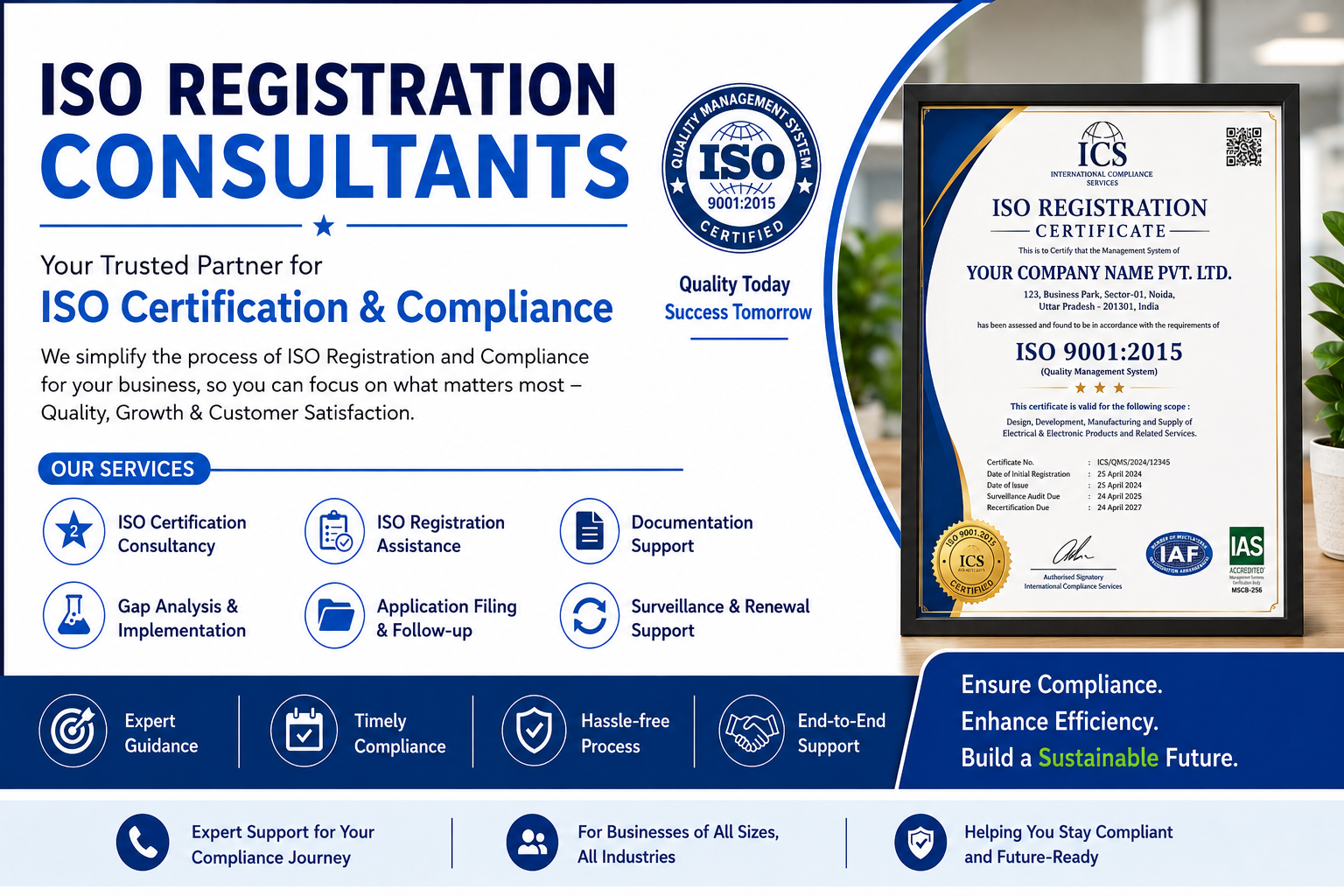
An ISO Registration Certificate is an important certification that demonstrates that an organization follows internationally recognized standards for quality, safety, environmental management, information security, or other business processes. ISO certification can help businesses improve their internal systems, build customer confidence, and demonstrate their commitment to maintaining consistent standards.
Businesses of different sizes and industries can apply for ISO certification depending on their activities and operational requirements. Common examples include ISO 9001 for quality management, ISO 14001 for environmental management, ISO 45001 for occupational health and safety, and ISO 27001 for information security management.
What is an ISO Registration Certificate?
An ISO Registration Certificate is issued to an organization after an assessment confirms that its management system complies with the requirements of a specific ISO standard. The assessment is generally conducted by an independent certification body.
The certificate identifies the organization, applicable ISO standard, scope of certification, and validity information. It serves as evidence that the organization's relevant management system has been assessed against the requirements of the applicable standard.
It is important to understand that ISO itself generally develops and publishes standards; certification is performed by independent certification bodies. Therefore, businesses should select a competent and appropriately accredited certification body according to their certification requirements.
Why is ISO Certification Important?
Obtaining an ISO Registration Certificate can provide several business advantages. It can help an organization establish structured processes and improve operational consistency.
Some key benefits include:
Improved quality and process management
Increased customer confidence
Better documentation and record management
Improved operational efficiency
Support for supplier and vendor evaluation
Enhanced business credibility
Better risk identification and management
Assistance in meeting customer or tender requirements
Improved opportunities in domestic and international markets
For businesses participating in tenders, supplying products to large organizations, or working with international customers, an appropriate ISO certification may also help demonstrate that the organization follows an established management system.
Common Types of ISO Certification
Different ISO standards address different organizational requirements. Some of the most commonly requested certifications include:
ISO 9001: This is one of the most widely recognized standards for Quality Management Systems (QMS). It focuses on consistent processes, customer satisfaction, continual improvement, and effective quality management.
ISO 14001: This standard focuses on Environmental Management Systems (EMS) and helps organizations manage environmental responsibilities and improve environmental performance.
ISO 45001: This standard is designed for Occupational Health and Safety Management Systems. It helps organizations establish processes for identifying workplace hazards and managing occupational health and safety risks.
ISO 27001: This standard focuses on Information Security Management Systems (ISMS). It helps organizations establish systematic processes for managing information-security risks and protecting information.
Other ISO standards may apply to specific sectors, processes, or management requirements.
ISO Registration Process
The process for obtaining an ISO Registration Certificate generally involves several stages. First, the organization identifies the appropriate ISO standard based on its business activities and objectives.
The organization then reviews its existing processes against the requirements of the selected standard. Where necessary, procedures, policies, records, and controls are developed or improved.
After implementation, the organization may conduct an internal audit to evaluate whether its management system is functioning effectively. Management review and corrective actions may also be required.
An independent certification body then conducts an assessment or audit. If the applicable requirements are satisfactorily met, the certification body can issue the ISO certificate within the agreed scope.
The exact process, documentation, audit requirements, and timelines can vary depending on the ISO standard, organization size, scope, and certification body.
Documents Required for ISO Registration
Documentation requirements depend on the selected ISO standard and the organization's activities. Common information may include:
Company or organization registration details
Business address
Organization scope and activities
Process information
Quality or management policies
Applicable procedures and records
Employee and organizational information
Existing management-system documentation
Relevant operational records
A consultant can help an organization understand the applicable requirements and prepare documentation and implementation plans.
ISO Registration Certificate Validity
ISO certificates are commonly issued for a defined certification cycle, often three years, subject to the rules of the certification scheme and certification body. Surveillance or periodic audits may be conducted during the certification cycle to verify continued conformity.
Organizations should also ensure that the certification body is suitable for their requirements and that the certificate clearly identifies the applicable standard and certification scope.
How Can an ISO Consultant Help?
An ISO Consultant can assist businesses in understanding the applicable standard, identifying gaps, preparing documentation, implementing management-system requirements, conducting internal audits, and preparing for certification audits.
Professional consultancy can make the certification process more organized and help businesses avoid common documentation and implementation issues. However, certification decisions should remain with an independent certification body.
Conclusion
An ISO Registration Certificate can strengthen an organization's management systems, improve credibility, and demonstrate conformity with an internationally recognized standard. Selecting the correct ISO standard and an appropriate certification body is essential for obtaining meaningful certification.
Businesses looking for ISO certification should first identify their specific requirements, understand the applicable standard, prepare the necessary management system, and undergo the required assessment. With proper preparation and professional guidance, organizations can establish effective systems that support quality, efficiency, compliance, and continual improvement.