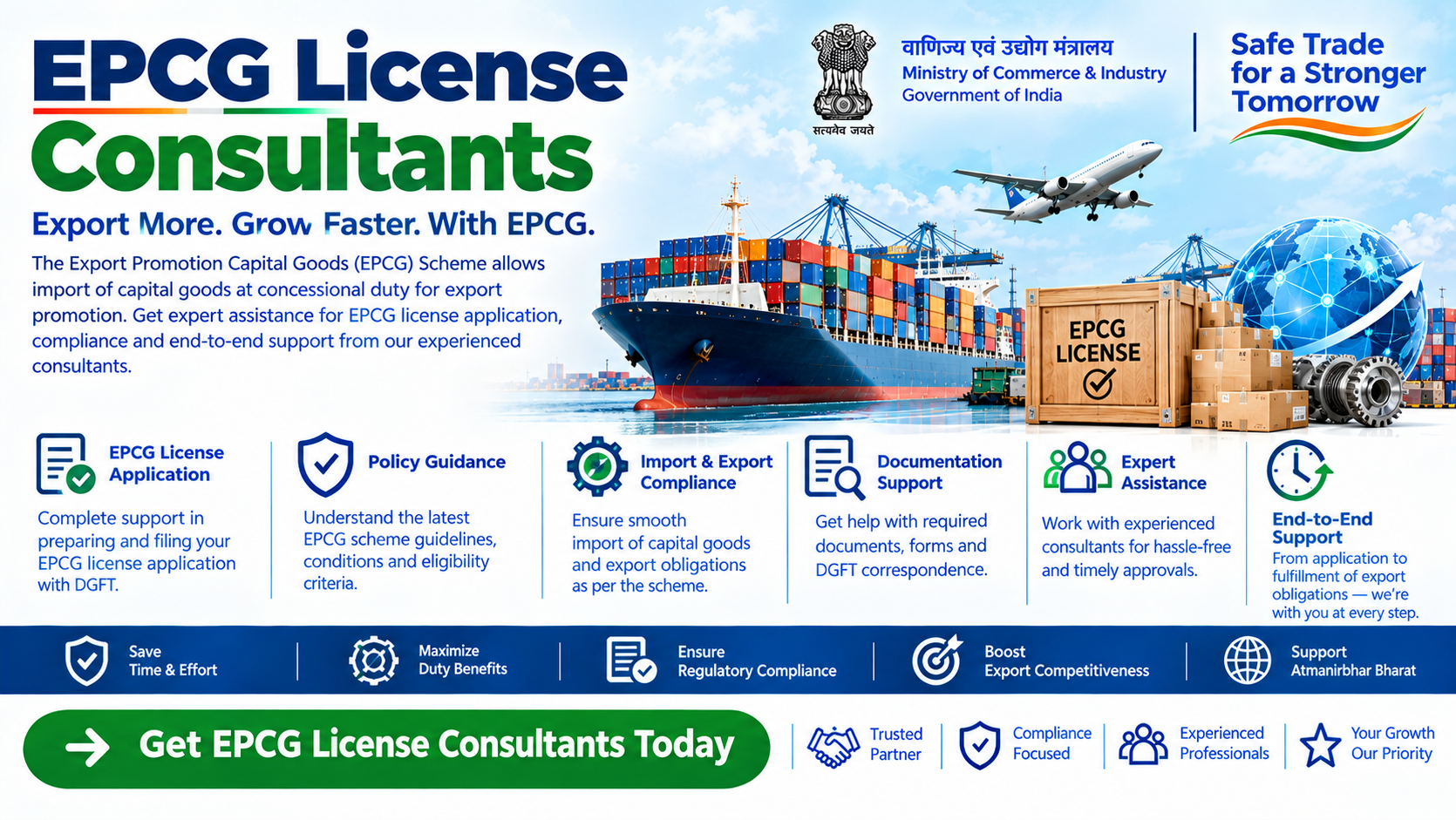
EPCG License Consultants play an important role in helping Indian manufacturers, exporters, and service providers obtain and manage an Export Promotion Capital Goods (EPCG) authorisation. The EPCG Scheme is introduced by the Government of India to encourage exports by allowing eligible businesses to import capital goods at a zero customs duty rate, subject to applicable conditions and export obligations.
Businesses involved in manufacturing, processing, production, and export activities often require advanced machinery, equipment, and technology to improve productivity and meet international quality standards. However, the cost of importing such equipment can be a significant investment. The EPCG Scheme helps eligible exporters reduce this initial cost while supporting the growth of India's export sector.
Professional EPCG License Consultants assist businesses throughout the application process, documentation, compliance requirements, and export obligation management. Their guidance helps applicants understand the applicable Foreign Trade Policy provisions and follow the procedures prescribed by the Directorate General of Foreign Trade (DGFT).
What Is an EPCG License?
An EPCG authorisation is a government authorisation issued under the Export Promotion Capital Goods Scheme administered by DGFT. It allows eligible businesses to import specified capital goods at zero customs duty, subject to the applicable scheme conditions and other relevant laws.
Capital goods covered under the scheme may include manufacturing machinery, production equipment, testing instruments, specialised industrial equipment, and other eligible items used in business operations.
The primary objective of the EPCG Scheme is to improve India's export competitiveness by making modern machinery and technology more accessible to eligible exporters.
Businesses should understand that obtaining an EPCG authorisation creates certain responsibilities, including fulfilling export obligations within the prescribed period and complying with applicable reporting and documentation requirements.
Why Do You Need EPCG License Consultants?
Applying for an EPCG authorisation involves regulatory procedures, supporting documents, and an understanding of export-related requirements. Errors in an application or failure to comply with export obligations may result in delays, additional costs, or other regulatory consequences.
Experienced EPCG License Consultants help businesses understand the process and manage the required formalities.
Their services typically include:
Assessing eligibility under the EPCG Scheme.
Explaining the applicable DGFT procedures.
Preparing and reviewing application documents.
Assisting with online application submission.
Supporting capital goods and machinery documentation.
Explaining export obligation requirements.
Helping maintain export and import records.
Assisting with export obligation discharge documentation.
Providing guidance on authorisation amendments and related compliance matters.
By working with professional consultants, businesses can improve the accuracy of their applications and develop a structured approach to regulatory compliance.
Key Services Offered by EPCG License Consultants
1. EPCG Scheme Eligibility Assessment
Before applying, a business should determine whether its proposed machinery imports and export activities qualify under the applicable EPCG provisions.
EPCG License Consultants review the nature of the business, proposed capital goods, export activities, and relevant supporting documents. They explain the applicable eligibility requirements and identify potential compliance issues before the application is submitted.
This preliminary assessment helps businesses make informed decisions about using the scheme.
2. EPCG Authorisation Application
Preparing an EPCG application requires accurate business information and supporting documentation. Applicants must follow the applicable DGFT procedures and provide the information required for their particular case.
Consultants assist with preparing and reviewing the application, checking the relevant details, and submitting the application through the prescribed online system.
Proper documentation can help reduce avoidable errors and improve the efficiency of the application process. Approval remains subject to the relevant authority's examination and applicable rules.
3. Capital Goods and Machinery Documentation
Businesses applying under the EPCG Scheme must provide appropriate details of the proposed capital goods in accordance with applicable requirements.
These may include machinery descriptions, technical specifications, supplier information, import-related documents, and other supporting records relevant to the application.
EPCG consultants help businesses organise the necessary information and maintain consistency across their documentation.
4. Export Obligation Compliance
One of the most important responsibilities associated with an EPCG authorisation is fulfilling the prescribed export obligation.
The applicable export obligation, calculation method, period, and conditions depend on the relevant Foreign Trade Policy provisions and the authorisation.
Consultants help businesses understand their obligations, monitor export performance, maintain supporting evidence, and identify potential compliance gaps.
Businesses should carefully track export transactions and maintain relevant shipping bills, export invoices, and other prescribed records.
5. Export Obligation Discharge Certificate Assistance
After fulfilling the applicable export obligation and other relevant conditions, the authorisation holder may need to apply for an Export Obligation Discharge Certificate (EODC).
EPCG License Consultants assist in reviewing export performance, organising supporting documents, preparing the required application, and responding to documentation requirements where applicable.
The competent authority examines the submitted records before deciding whether the export obligation has been discharged.
6. EPCG Authorisation Amendment and Post-Issuance Support
In some cases, businesses may require amendments or other post-issuance assistance concerning their authorisation.
Depending on the applicable provisions, this may involve corrections to authorisation details, changes to eligible capital goods information, or assistance with other permitted modifications.
Consultants explain the applicable procedure and help prepare supporting documents for the relevant request.
Who Can Benefit from the EPCG Scheme?
The EPCG Scheme may benefit eligible businesses involved in export-oriented activities, subject to the applicable policy conditions.
Potential beneficiaries include:
Manufacturers exporting finished products.
Engineering and industrial equipment manufacturers.
Textile and garment exporters.
Pharmaceutical and chemical manufacturers.
Food processing and packaging businesses.
Electronics and electrical equipment manufacturers.
Automotive component manufacturers.
Eligible service providers covered under the scheme.
The suitability of the scheme depends on the applicant's business activities, proposed capital goods, and the applicable regulatory requirements. Businesses should obtain an eligibility assessment before proceeding.
Documents Required for EPCG Authorisation
The documents required can vary depending on the applicant, the proposed imports, and the nature of the application. Commonly relevant documents may include:
Importer Exporter Code (IEC).
PAN and business registration details.
GST registration details, where applicable.
Digital signature and authorised signatory information.
Details and specifications of proposed capital goods.
Supplier quotations or pro forma invoices, where relevant.
Export performance information, where required.
Supporting declarations and prescribed application documents.
Other documents requested under the applicable DGFT procedures.
Applicants should verify the current document checklist before filing because requirements may change depending on the case and prevailing regulations.
Benefits of Hiring Professional EPCG License Consultants
Working with experienced EPCG License Consultants offers several potential benefits.
Regulatory guidance: Consultants help businesses understand the relevant EPCG provisions and application procedures.
Documentation support: Professional review helps identify missing information and inconsistencies before submission.
Improved compliance planning: Export obligation tracking can help businesses monitor their responsibilities and prepare supporting evidence.
Time management: Assistance with application preparation and documentation can reduce the administrative burden on internal teams.
Post-authorisation assistance: Consultants can support businesses with export obligation discharge and other applicable compliance requirements.
Better decision-making: An eligibility assessment helps businesses evaluate whether the EPCG Scheme is appropriate for their machinery investment and export plans.
Consultants provide professional assistance, but authorisation approval and the acceptance of compliance documents remain subject to the competent authority's decision.
EPCG License Application Process
The general process for obtaining and managing an EPCG authorisation involves the following steps:
Initial consultation: Discuss the business, capital goods requirements, and export activities.
Eligibility assessment: Review the applicable scheme conditions and proposed machinery imports.
Document preparation: Compile business information and supporting documents.
Online application: Submit the application through the prescribed DGFT system.
Authority review: Respond to any queries or additional documentation requirements.
Authorisation issuance: Receive the authorisation if approved by the competent authority.
Compliance monitoring: Track imports, exports, and applicable export obligation deadlines.
Obligation discharge: Submit the required evidence and apply for discharge when eligible.
The exact process and timelines depend on the application, applicable rules, and regulatory review.
Choose Reliable EPCG License Consultants in India
Selecting the right EPCG License Consultants is important for businesses planning to import capital goods and expand their export operations. Companies should look for consultants with relevant DGFT experience, a clear understanding of export documentation, transparent professional fees, and knowledge of post-authorisation compliance.
A reliable consultant should explain the applicable conditions, documentation requirements, and export obligations before the business commits to the process. Businesses should also ensure that their import and export activities comply with all relevant customs, DGFT, and other applicable legal requirements.
Conclusion
EPCG License Consultants help Indian businesses navigate the procedures associated with the Export Promotion Capital Goods Scheme. From eligibility assessment and application preparation to export obligation monitoring and EODC assistance, professional guidance can help businesses manage the process more effectively.
For eligible manufacturers and exporters, the EPCG Scheme can support investment in modern machinery and improve export competitiveness by providing access to specified capital goods at zero customs duty, subject to applicable conditions.
Businesses planning to use the scheme should evaluate their eligibility, understand their export obligations, and maintain accurate records throughout the authorisation period. Working with experienced EPCG License Consultants can help establish a more organised approach to DGFT procedures and export compliance.