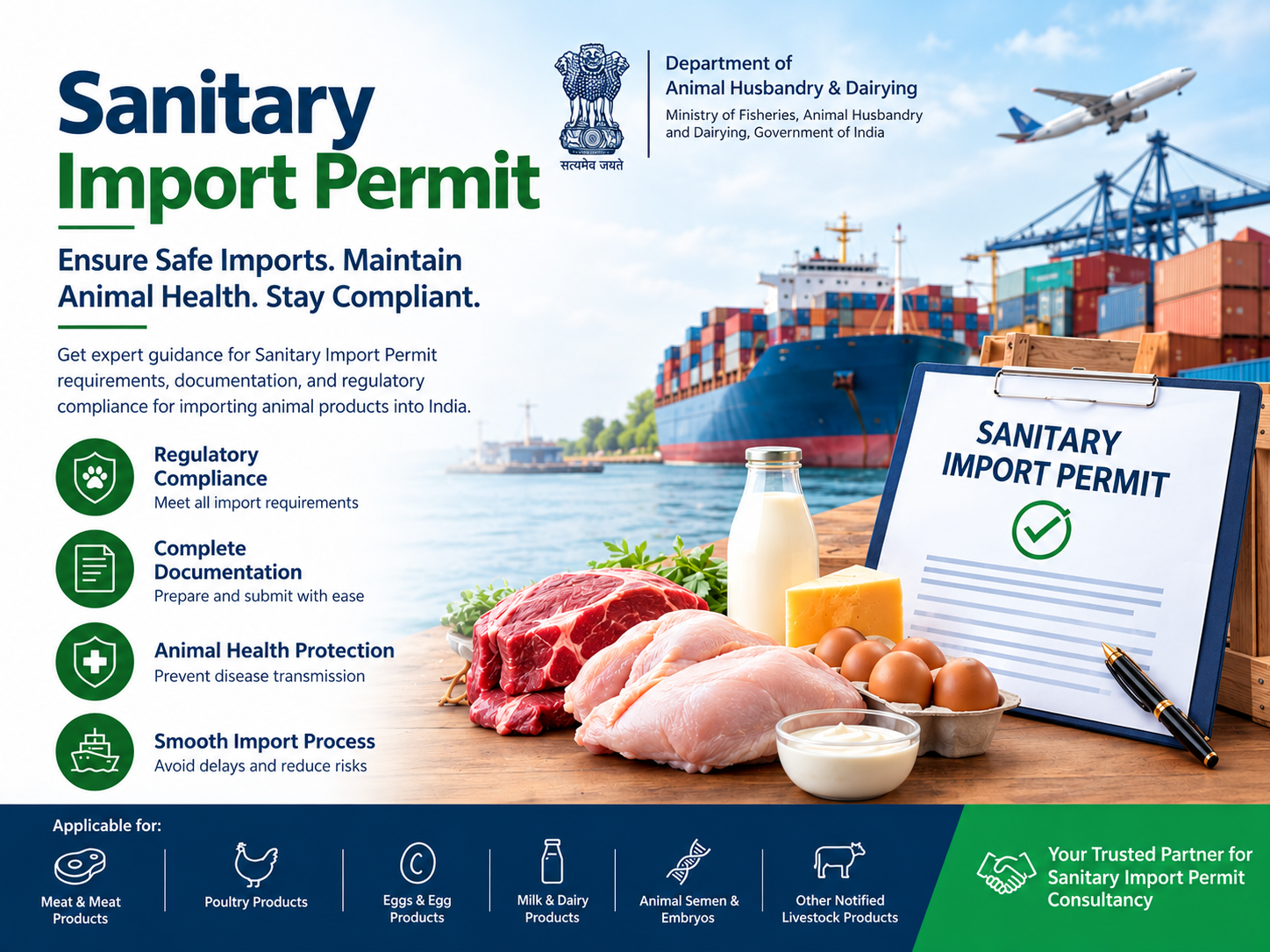
A Sanitary Import Permit (SIP) is an important regulatory document for importing certain animal products into India. It is intended to ensure that imported products meet the applicable animal health and sanitary requirements and do not pose a risk of introducing infectious diseases into the country. Importers dealing with livestock products must understand the applicable regulations, documentation requirements, and approval procedures before importing goods.
Businesses involved in international trade, food processing, animal product distribution, and related industries may need to assess whether their products require a Sanitary Import Permit or other import approvals. Proper compliance helps reduce the risk of shipment delays, customs issues, and financial losses.
What Is a Sanitary Import Permit?
A Sanitary Import Permit is an authorization issued by the competent Indian authority for the import of specified animal products, subject to applicable regulations. In India, the Department of Animal Husbandry and Dairying (DAHD), under the Ministry of Fisheries, Animal Husbandry and Dairying, administers the relevant import permit framework for livestock products.
The requirement depends on the nature of the product, its origin, intended use, and the applicable import policy. Importers should verify the latest requirements before placing an international purchase order or arranging shipment.
A Sanitary Import Permit should not be confused with an Import Export Code (IEC), a customs clearance document, or a veterinary health certificate. These documents serve different regulatory purposes, and more than one approval may be necessary for a particular shipment.
Which Products May Require a Sanitary Import Permit?
The permit framework applies to specified livestock products and other regulated animal-origin goods, depending on the applicable rules and notifications.
Examples of products that may require regulatory assessment include:
Meat and meat products
Poultry products and certain animal-origin materials
Eggs and egg products
Milk and dairy products
Animal semen and embryos
Other notified livestock products and biological materials
Important: Not every animal-origin product automatically requires the same permit. Requirements can vary according to product classification, processing, intended use, country of origin, and current government notifications. Importers should confirm the exact requirement for their products before proceeding.
Why Is a Sanitary Import Permit Important?
A Sanitary Import Permit helps support India's animal health protection framework and regulates the import of specified products that may carry animal diseases.
Obtaining the necessary approval can help importers:
Meet regulatory requirements: Ensure that applicable import conditions are addressed before shipment.
Reduce shipment delays: Identify documentation gaps before goods arrive at an Indian port.
Support animal disease prevention: Help ensure that regulated imports meet relevant sanitary safeguards.
Improve documentation readiness: Organize product details, origin information, and supporting certificates.
Reduce commercial risks: Avoid preventable expenses arising from non-compliance, shipment detention, or rejection.
Documents Required for a Sanitary Import Permit
The documentation required depends on the product category and applicable regulations. Importers may need to prepare the following documents for review:
Import Export Code (IEC), where applicable
Importer's business registration details
Product description and technical specifications
Product composition and intended use
Country of origin and manufacturer details
Proforma invoice or commercial documentation
Veterinary health certificate or other prescribed sanitary documentation
Details of the exporting establishment, where required
Additional declarations, test reports, or supporting documents requested by the competent authority
Applicants should ensure that the product description, country of origin, manufacturer details, and intended use are consistent across all submitted documents. Additional requirements may apply to specific products or exporting countries.
Sanitary Import Permit Application Process
The application process generally involves identifying the applicable regulatory requirements, preparing supporting documents, submitting the application to the competent authority, and responding to any queries.
Step 1: Identify the Product Category
Determine the exact product being imported, including its composition, processing method, intended use, and country of origin.
Step 2: Verify Applicable Regulations
Check whether the product requires a Sanitary Import Permit and identify any additional import conditions, restrictions, or veterinary certification requirements.
Step 3: Prepare the Documents
Compile the required business, product, manufacturer, and sanitary documentation. Ensure that all information is accurate and complete.
Step 4: Submit the Application
Submit the application through the applicable government procedure or designated authority, following the current requirements for the relevant product category.
Step 5: Respond to Regulatory Queries
The authority may request clarifications or additional information. Timely responses can help prevent unnecessary processing delays.
Step 6: Obtain Approval Before Importing
Where a permit is mandatory, ensure that the necessary authorization and applicable conditions are satisfied before dispatching the shipment. Also verify any validity period, quantity limits, or other conditions specified in the approval.
Common Challenges in Obtaining a Sanitary Import Permit
Importers may face difficulties because of incorrect product classification, incomplete documentation, unclear product specifications, differences between certificates, or uncertainty about country-specific sanitary requirements.
Another common issue is arranging shipment before confirming the applicable permit requirements. This can expose businesses to avoidable storage charges, customs delays, and other commercial complications.
Working with an experienced regulatory consultant can help businesses identify the relevant requirements, organize documentation, and coordinate the application process more efficiently.
Sanitary Import Permit Consultancy Services
Professional Sanitary Import Permit consultants assist importers in understanding applicable regulations and preparing documentation for the relevant approval process. Consultancy support may include product requirement assessment, document review, application assistance, regulatory coordination, and guidance on related import compliance requirements.
Businesses importing regulated animal-origin products should seek product-specific advice rather than relying on general documentation lists. Final approval remains subject to the competent authority's assessment and applicable government rules.
Conclusion
A Sanitary Import Permit is an important consideration for businesses importing regulated livestock products into India. Understanding the applicable requirements, preparing accurate documents, and obtaining necessary approvals at the correct stage can help reduce compliance risks and shipment delays.
Before importing any regulated product, verify the latest requirements with the Department of Animal Husbandry and Dairying and the relevant customs or other competent authorities. Professional consultancy support can help importers navigate the process and maintain better regulatory readiness.